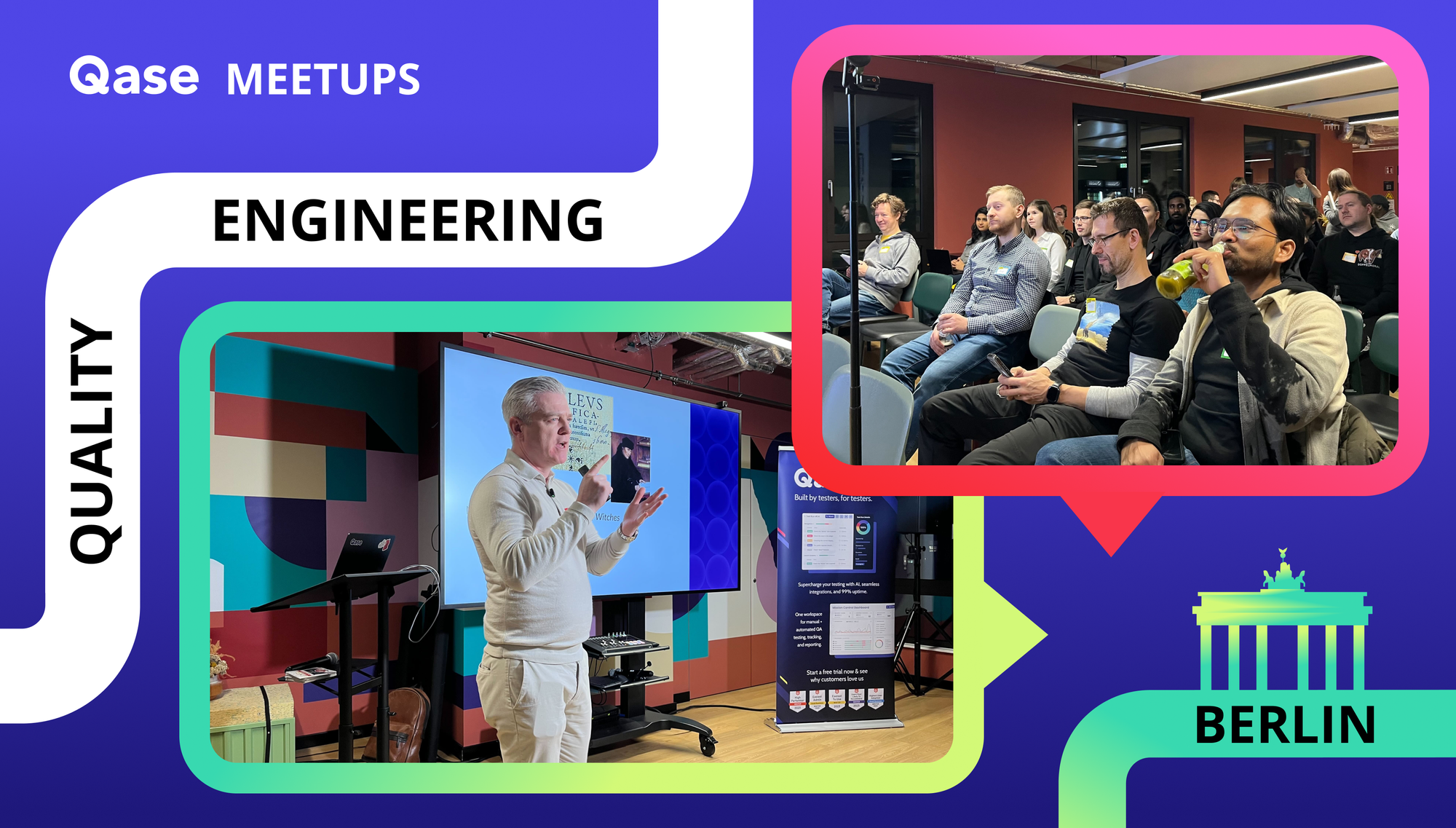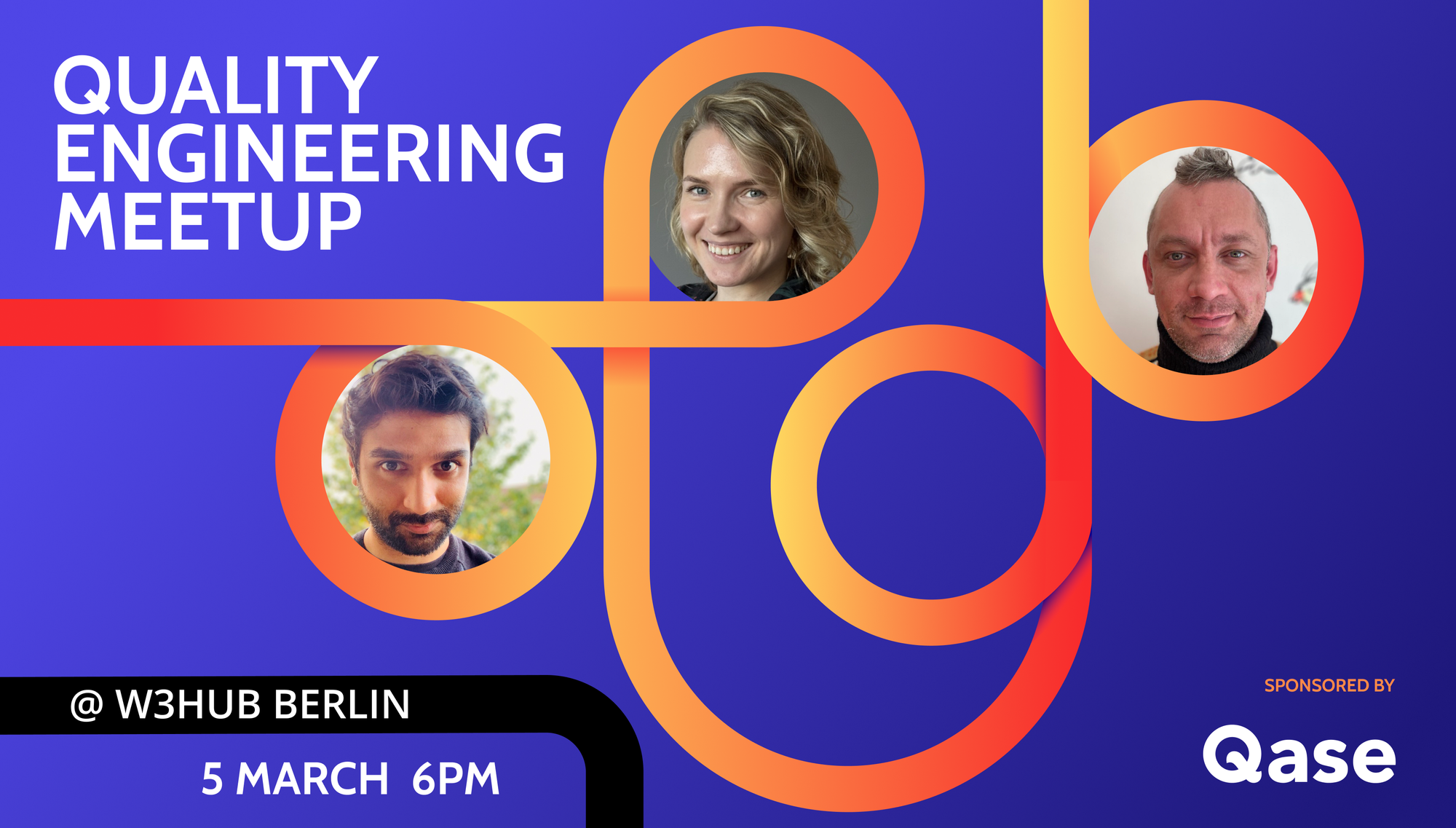
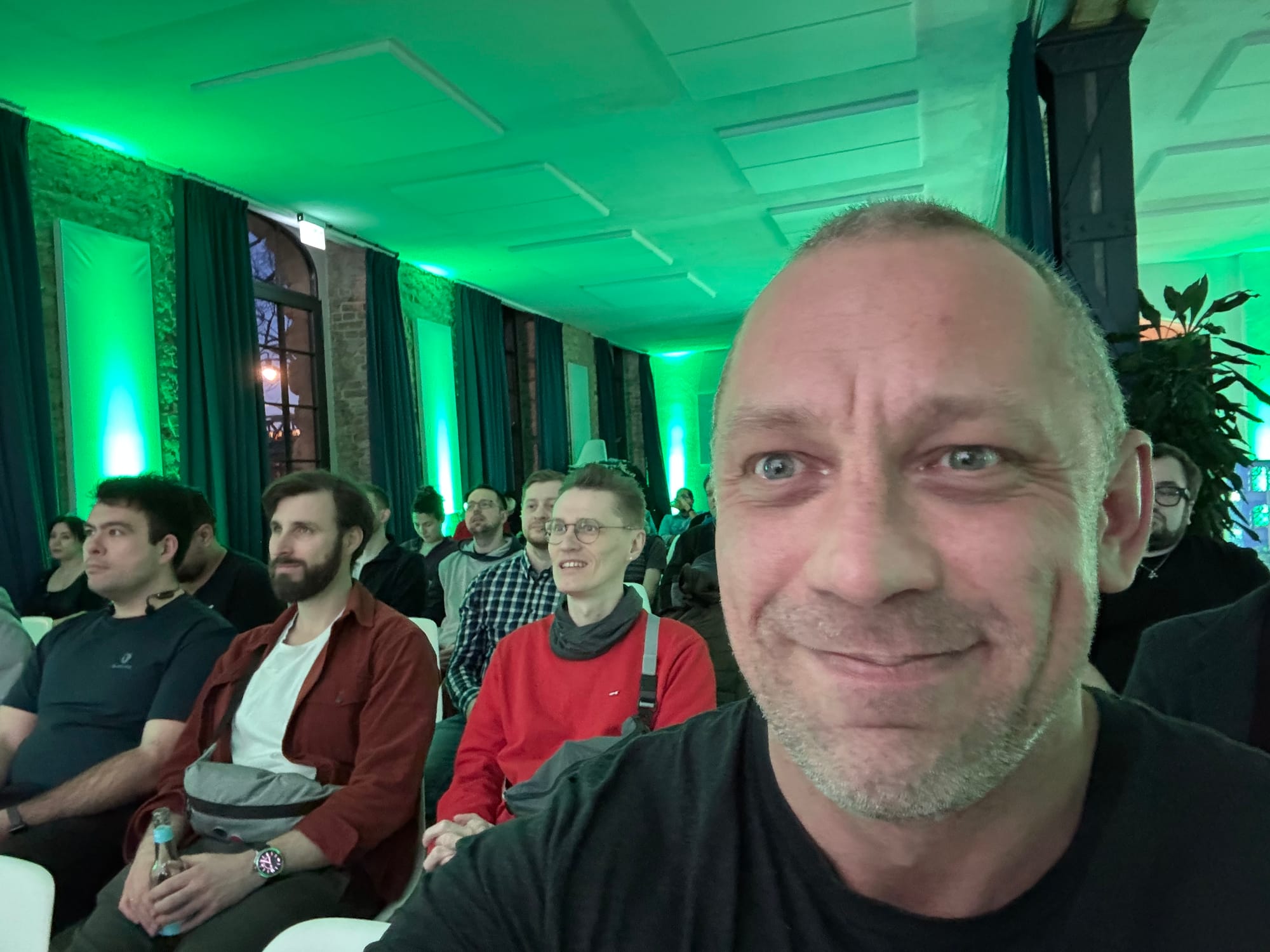
Our Berlin Quality Engineering community came together for another evening, this time at a new venue, W3.Hub, which turned out to be a fantastic spot for the event. Around 70 people showed up, and the energy was as good as ever: three very different talks, great pizza, and the kind of discussions that keep going well past the official end.
It is a true pleasure to have people coming up to me and saying "thank you for an amazing set of talks" or "you must run a conference". This means a lot, and maybe partly it works so well because I intentionally try to maintain a diversity of topics: a human-centric angle, a scientific one, and a day-to-day QA one. All about quality, of course, but from very different perspectives I believe we must always have.
Food QA: Testing Tasting
Mitesh Patel opened the evening with an awesome talk on how big food corporations test food.
Mitesh introduced the concept of "wetware QA": our brains are essentially running quality checks every time we taste food. When you bite into something and your brain decides whether it is good, it is running a testing algorithm — dissolution of chemicals in saliva, activation of taste receptors, conversion to nerve impulses, and recognition of flavours by the cortex.
So it is very easy for one person to "test" what they are eating and give a verdict: high or low quality. But everyone is different, and tasting preferences change even within one person depending on the time of day or their mood. So what would it take for a food producer to test the food they produce? Ask all their customers to taste it?
Human taste testing does not scale. The food industry tries to solve this with Sensory Evaluation Panels — groups of trained tasters — but these are expensive, slow, subject to biopsychosocial bias, and take months to set up. So maybe it would be possible to skip humans altogether? Teach a computer what food tastes?
Computers do not have taste receptors or saliva — they simply cannot run the same algorithm our brains do. But they can see flavours. Through near-infrared spectroscopy, food chemicals reveal unique light absorption signatures — what Mitesh called "seeing the invisible colours of food."
In software development, some systems are also too complex to fully analyse from the inside — large language models being the obvious example right now. So we do the same thing Mitesh described: find a proxy. Black-box testing, RAGAS evals, observability-based testing — all ways of seeing what we cannot directly taste.
Earn Trust, Keep Your Job
Asya Isakova gave the second talk about trust at work, grounded in organizational psychology research.
You got the job, now how do you keep it? Your colleagues and managers decide whether to trust you not by reading your CV, but by watching what you do in the first weeks and months. Trust is defined as "a psychological state comprising the intention to accept vulnerability based upon positive expectations of the intentions or behaviour of another". So how do you build it? How do you help people desire to be open or even vulnerable to you?
Asya identified three pillars: integrity (do the right thing consistently — be honest, fair, hold high standards), ability (show you can do the job well — skills plus good judgement), and benevolence (show you care about others' success, not just your own).
To show ability: make "done" explicit and testable, deliver something small early, map workflows, keep a blocker log, and communicate progress predictably — Done, Next, Blocked, Ask. To show integrity: make your work traceable, close loops, link your outputs to goals, respect team norms, escalate risks early, and own your mistakes. To show benevolence: ask stakeholders what success looks like from their side, show respect for people's time, share credit, offer small help early, avoid blame language (describe problems as system issues, not personal failures), and close the onboarding loop by sharing an "onboarding gaps and fixes" document at week four to six, so the next person has it easier.
This talk was just the tip of the iceberg. Trust has a much broader impact on how teams work — and how much waste a lack of it creates. Asya is currently doing research on the "trust tax" topic at BeyondQuality: how missing trust translates into extra process, slower decisions, and unnecessary controls. You can follow and contribute to the discussion on GitHub.
QA Myths Busting: A Practical Guide to Higher Quality
I gave the third talk about four QA myths that are unfortunately still prevalent in the industry. Each one has a detailed companion article:
- Quality is testers' responsibility
- More testing means better quality
- QA slows work down
- Quality can be measured
As always, a big thank you to the speakers for sharing their work, to W3 Hub for hosting us, and to everyone who came and stayed for the conversations afterwards.
If you have been thinking about giving a talk — whether it is your first one or your fiftieth — come talk to me. I am always happy to help you get there. See you at the next meetup!!!